Tactics For Catching Carp Mid-Water
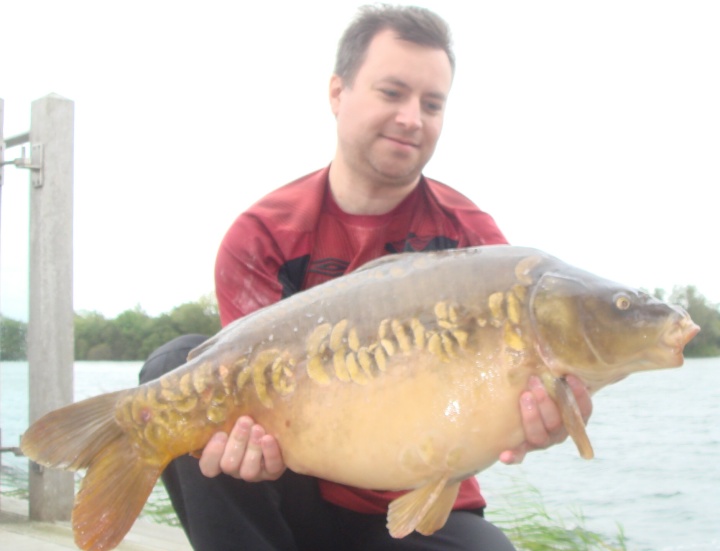
The majority of anglers fishing for carp attempt to catch them with bottom baits. During the summer, some may try to catch carp off the top using floating bait. Both these fishing methods catch huge numbers of carp, but very wary fish may not take bait presented in either of these ways. The only way to catch these carp may be with cleverly presented baits positioned in mid-water or a few feet off the bottom.
There are a lot of anglers who won’t fish for carp in the mid-water area of the lake for a few reasons; some believe catching carp mid-water will not be easy, or they may not believe that any carp could be fooled with unnatural looking bait suspended mid-water. Whatever the reason, carp can be caught mid-water and I think it should be encouraged more often.
Why Carp Can Be Caught in Mid-Water
Although suspended bait may look wrong to us, there are many carp that will only feed on suspended food items. This is because they have learned that bait presented in any other way can be dangerous and therefore needed to find sources of food which they felt were safe to eat. Also, you should be aware that suspended food items are not as unnatural as we may think!
There are 2 natural ways in which food items can become suspended in the water
1. Water Currents.
Some food items will naturally become suspended during heavy winds when the undercurrent gains strength and pushes food items down the lake. Some items will hit into obstructions as the current pushes them, like weed beds and gravel bars and may remain against these obstacles in a suspended position for some considerable time. This might be why fish won’t see suspended bait as unnatural in some areas of the lake, and the reason why many carp can be caught mid-water using various forms of suspended bait presentations placed in the right areas.
2. Fish causing food items to become suspended
Sounds crazy but, I have heard a fair few anglers claim they have seen carp disturb bait patches in order to cause the food to bounce upwards, then they’ve taken them before the bait drops back onto the bed. Actually, as a second thought, this may be one reason why some carp are more willing to take smaller baits – bigger, heavier baits won’t bounce up easily!
They have learned that the food items that don’t fly up are the dangerous ones because they are tethered and don’t act the same as the surrounding free bait. In fact, I’m sure that one of the Korda underwater DVD’s shows a carp actually doing this!
How To Catch Carp Mid-Water
Using a zig rig is one of the most effective ways of catching carp mid-water. Although, I have found that it’s not just a case of plopping out a zig rig with a single hook bait and hoping the carp go for it. There’s an art to zig rig fishing. Most carp will avoid a bait out there on its own. You need to think more about bait placement, and position it where it will look a little more natural to what fish may have encountered before. For example, next to a weed bed, lily pads, or just above a trough or a sloping bank are good places to position a zig rig. At times when the underwater current is strong, some food items may well bounce upwards off the edge of the trough or from in between the stalks of the lilies. This is when any suspended bait will look more natural and can easily fool a carp into taking the hook bait.
Another method for catching carp mid-water is to bait up around the zig rig so the hook bait is not out there on its own. This gives fish a chance to take free particles of food which are suspended in the water and thus, learn to associate these as safe before you introduce your hook bait. This can be achieved by mixing up a sloppy type of spod mix by adding ground bait, or liquidized bread so it falls very slowly. The main cloud of the mix should suspend in the layers of the water. Sometimes the cloud from these minute suspended particles helps to hide parts of the end tackle and hook. This gives this fishing method an extra advantage over just using single hook baits out on a zig rig.
Another tactics is to fill a pva bag with small, floating items of bait and place the lead into the bag along with them. The bag will fall to the bottom with the lead and the hookbait will still position as normal in mid-water. But, as the bag melts, small item float upwards towards the hook bait and will gently pass through on their way to the surface. This fishing method has the advantage of attracting carp into the area from a distance away because the free bait floats to the surface.
You can also work this fishing tactic the opposite way by casting out a spod over the area where the zig is positioned, then let bait of varying buoyancies fall down past the zigged hook bait. This will also attract carp down to where the bait is falling, and where you could try positioning another rig with a bottom bait attached, just in case the carp suss out the zig rig above but are happy to take the falling bait as they hit the bottom.


In the past, I have also used a spare rod to cast out PVA bags that are made to float (ones without pinholes), towards the zig rig. As the bag melts a few items fall out at different stages helping to bait up around the zig-rigged hook bait. After the whole bag melted, I just reel it back in and attached another bag to continue the flow of free particles around the zigged fishing rig. This may seen pointless, but a small pva bag will make less of a splash than a spod.
Using fairly dry and oily groundbait balls in pva stockings can work very well with zig rigs as well. The balls release little particles of dry, floating bits at different intervals, and these clouds travel upwards to the hook bait area. Many other groundbait tactics can be used to help catch carp in the middle areas of the water body.
A nice quiet way is to use a dissolving capsule full of liquid attractants. These can be attached with a rubber band to the lead and will dissolve slowly over a period of 20 minutes to half hour. This means the area has been left quiet for some time giving the carp chance to come back into the swim and investigate that delicious smell!
I often fill these with an oil that’ll travel upwards and suspend into the mid-water layers.
Other Methods of Catching Carp in Mid-Water
Another way to target carp mid-water is to use a long hook link with a neutral buoyancy boilie or very slow sinking hookbait. The hook link can be up to four feet in length and made of a fluorocarbon line for less visibility. The lead will sink immediately but, the bait will sink slowly taking up to ten minutes to hit the bottom. You’ll have to experiment with various types of foam in order to achieve that kind of buoyancy, but it is quite possible when using dense foam that absorbs water slowly. This type of presentation can look very attractive and natural for many passing carp. You should try this tactic more when you definitely know carp are swimming around mid-water in the area.
How to Camouflaging Rigs End Components
Tips on Why Some Carp Cannot be Caught
Setting Up The Chod Rig for Carp Fishing
Making a Rig for Single Hook Bait Methods
Should I Place Bait Close to the bend of Hook?
How Long Should The Hair Rig Be When Making Rigs
Ways to Set Up Rigs to Limit Potential Tangles On Casting
List of Excellent hook Baits Not Seen by Many Carp
Fishing Situations for Pop-ups or Best to Use Bottom Baits
What's the Best Bait Choice for Each Fishing Situation?
Best Boilie Additives & Ingredients Making Own Bait
What Are the Best Particle Baits for Attracting Fish?
Low-cost Effective Baits That carp Will Love to Eat!
What's Best Size Boilie to Use for Catching Bigger Carp?
The Basic Carp Baits for Fishing for largest Carp
Groundbait Methods for Attracting in Large Fish into Swim
List of Some of the Best Big Carp Fishing Baits
Carp Fishing Methods for Early Springtime
How Deep of Water Do Carp Prefer to Patrol in?
Snag and Tree Carp Fishing Methods
Roam to Catch Carp or Best to Bait Heavily
Mid-Water Techniques for Catching Larger Carp
Margin Fishing for Huge Resident Carp
Best Way to cast to Showing Carp
How Many Times Should I be casting out Rigs?
How to Catch Carp Never Caught Before
How to Deal With Crayfish Problems On New Waters
Ways to Improve Better Bite Indication on Bobbins
How Sharp Are A Carp's Senses, Do They Have Good Smell?
Carp Spawn Process & Eating Habits During Spawning
Will Heavy Rain Affect a Carp Feeding Habits?
Will All Carp in a Lake Follow a Strong Wind?
How to Find out Areas & Routes Where Carp Patrol
Problems Using the Withy-Pool Rigs
Rig & Bait Problems When Presented on Silt Bed
How to Limit the Lead weight Sinking in Soft Silt
 Copyright Content!
Daily Carp catching Tips